
Finding the right employees is one of the biggest challenges for any business. Whether you’re a startup hiring your first employee or an established company expanding your workforce, recruitment plays a crucial role in business success. A structured recruitment process helps organizations attract skilled professionals, reduce hiring costs, and build high-performing teams. In this guide, we’ll explain what recruitment is, why it’s important, its process, types, benefits, and best practices.
What is Recruitment?
Recruitment is the process of finding and hiring the right people for the right job. Every business, whether it’s a startup, a growing company, or a large enterprise, needs skilled employees to achieve its goals. This is where recruitment plays an important role.
In simple words, recruitment is all about attracting qualified candidates, evaluating their skills, and selecting the best person for a job opening. It is one of the key functions of Human Resource Management (HRM) because the success of any organization depends on having the right people in the right roles.
For example, imagine a company planning to expand its sales team. Instead of hiring randomly, the HR team first identifies the hiring requirements, prepares a job description, posts the vacancy, reviews applications, conducts interviews, and finally selects the most suitable candidate. This complete journey is known as the recruitment process.
A well-planned recruitment process helps businesses hire talented professionals, save time and hiring costs, improve employee retention, and build a stronger workforce for long-term success.
Recruitment is one of the key functions of Human Resource Management (HRM).
Why is Recruitment Important? Benefits for Businesses
Recruitment is the foundation of building a skilled and productive workforce. A well-planned recruitment process helps businesses attract qualified professionals, reduce hiring risks, and support long-term growth. Here are the key reasons why recruitment is important:
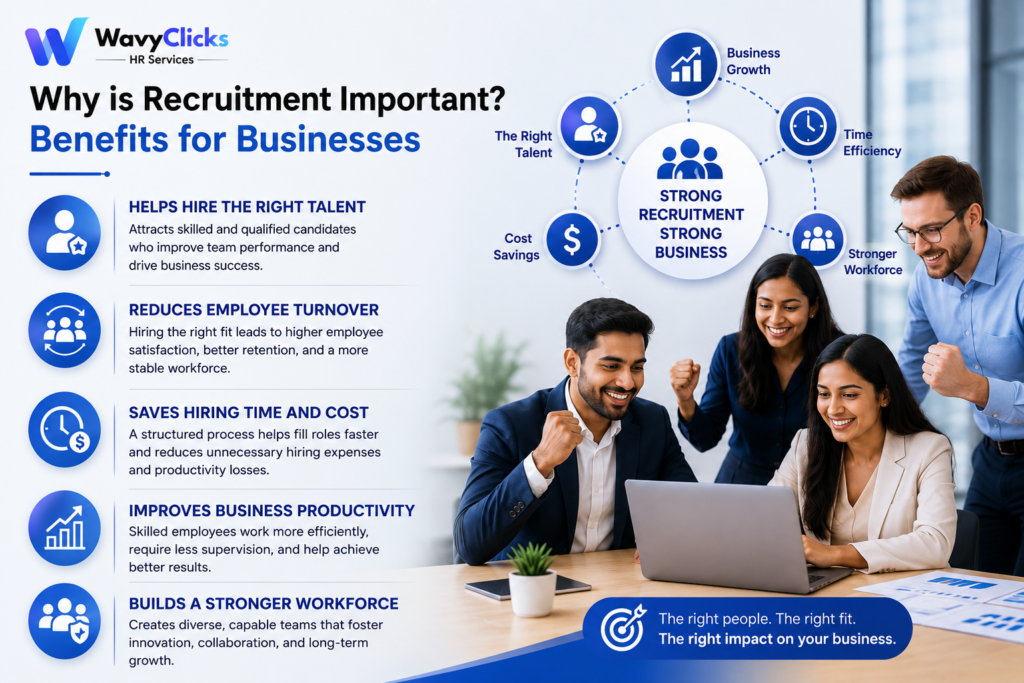
1. Helps Hire the Right Talent
An effective recruitment process identifies candidates with the right skills, qualifications, and experience for specific job roles. Hiring the right talent improves work quality, boosts team performance, and contributes to overall business success.
2. Reduces Employee Turnover
When businesses recruit candidates who match both the job requirements and company culture, employees are more likely to stay longer. This reduces frequent hiring costs and creates a stable, motivated workforce.
3. Saves Hiring Time and Cost
A structured recruitment strategy helps organizations fill vacancies faster by targeting suitable candidates from the beginning. This minimizes unnecessary hiring expenses and prevents productivity loss caused by unfilled positions.
4. Improves Business Productivity
Skilled employees perform their responsibilities more efficiently and require less supervision. As a result, teams become more productive, projects are completed on time, and business operations run smoothly.
5. Builds a Stronger Workforce
Recruitment enables businesses to build diverse and capable teams that support innovation, collaboration, and long-term growth. A strong workforce helps organizations adapt to changing market demands and remain competitive.
Recruitment Process
A structured recruitment process helps organizations hire qualified candidates efficiently while ensuring a positive hiring experience. Let’s look at the seven key steps involved in a successful recruitment process.
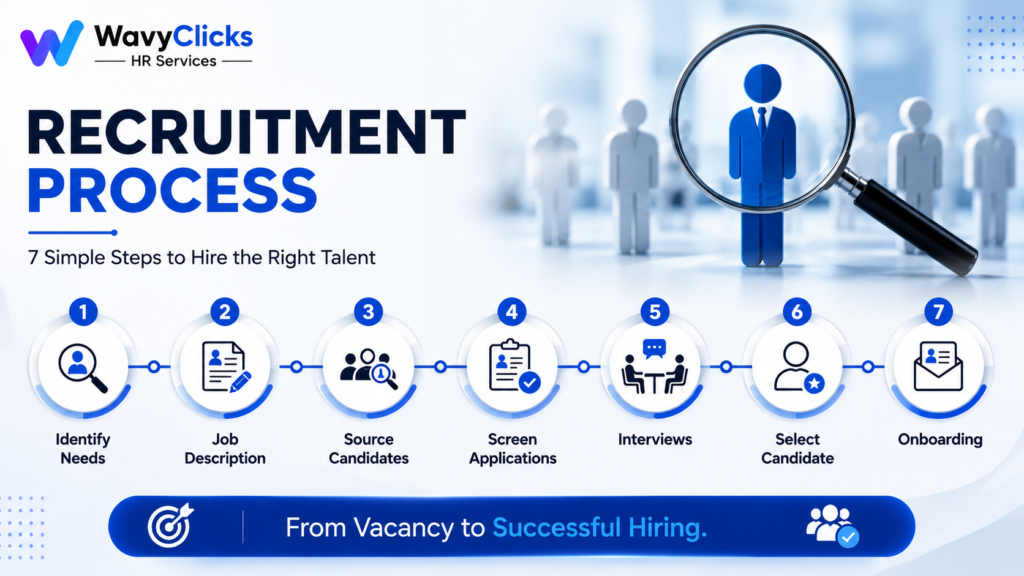
1. Identify Hiring Needs
The recruitment process begins by identifying vacant positions, workforce requirements, and the skills needed for each role. Understanding hiring needs helps businesses recruit the right talent at the right time.
2. Create a Job Description
A clear and detailed job description outlines responsibilities, required qualifications, skills, experience, salary expectations, and company culture. Well-written job descriptions attract more relevant and qualified applicants.
3. Source Candidates
Recruiters search for potential candidates through job portals, company career pages, LinkedIn, social media, employee referrals, campus recruitment, and professional recruitment agencies to build a strong candidate pool.
4. Screen Applications
Recruiters review resumes, shortlist suitable candidates, and evaluate their qualifications, skills, and work experience to identify applicants who best match the job requirements.
5. Conduct Interviews
Shortlisted candidates participate in interviews to assess their technical expertise, communication skills, problem-solving abilities, and cultural fit. Additional assessments may be conducted depending on the role.
6. Select the Best Candidate
After evaluating interview performance and assessment results, recruiters choose the candidate who best fits the organization’s requirements and business objectives.
7. Offer Letter & Onboarding
Once the selected candidate accepts the job offer, the onboarding process begins. This includes completing documentation, introducing company policies, and helping new employees integrate smoothly into their roles.
Types of Recruitment
There isn’t a single recruitment method that works for every business. Depending on the role, company size, and hiring needs, organizations choose different types of recruitment to find the right talent.
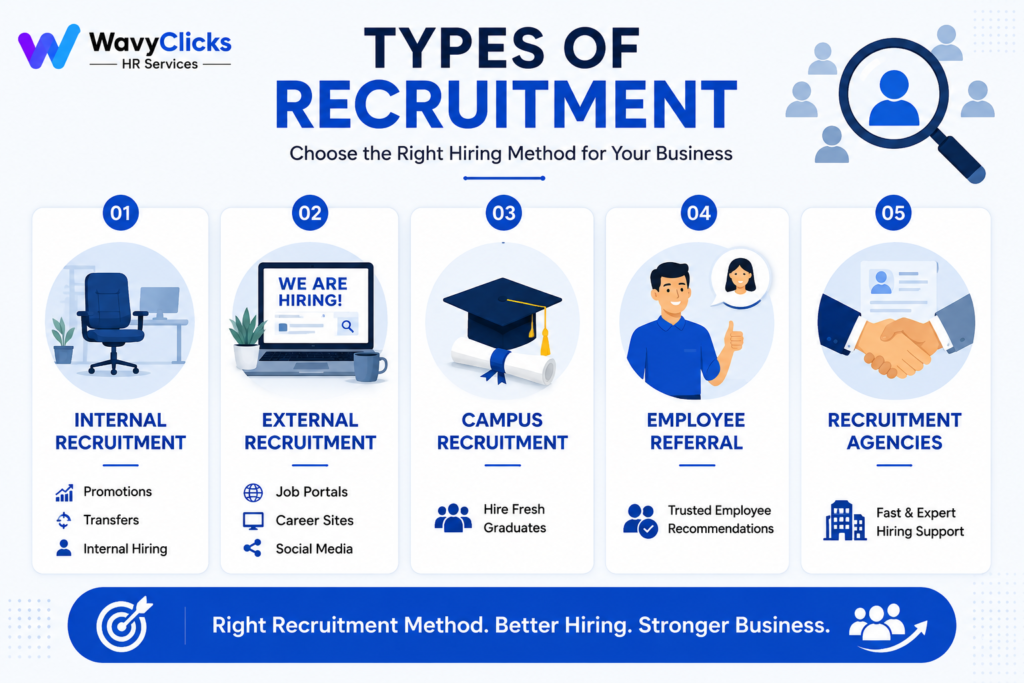
1. Internal Recruitment
Internal recruitment fills vacancies using existing employees through promotions, transfers, or internal job postings. It improves employee morale, encourages career growth, and reduces recruitment costs.
2. External Recruitment
External recruitment involves hiring candidates from outside the organization through job portals, career websites, social media, recruitment agencies, and networking platforms. It brings fresh ideas, new skills, and diverse experience.
3. Campus Recruitment
Campus recruitment allows organizations to hire fresh graduates directly from colleges and universities. It helps businesses build future-ready teams while providing young professionals with career opportunities.
4. Employee Referral
Employee referral programs encourage existing employees to recommend qualified candidates for open positions. Referral hiring is often faster, more cost-effective, and results in higher-quality hires.
5. Recruitment Agencies
Recruitment agencies specialize in sourcing, screening, and shortlisting qualified candidates for businesses. They help organizations reduce hiring time and efficiently fill both permanent and bulk hiring requirements.
Benefits of Recruitment
A structured recruitment process helps businesses identify candidates with the right qualifications, skills, and cultural fit, leading to better hiring decisions and stronger team performance. Our Recruitment Services help businesses hire qualified candidates quickly and efficiently.
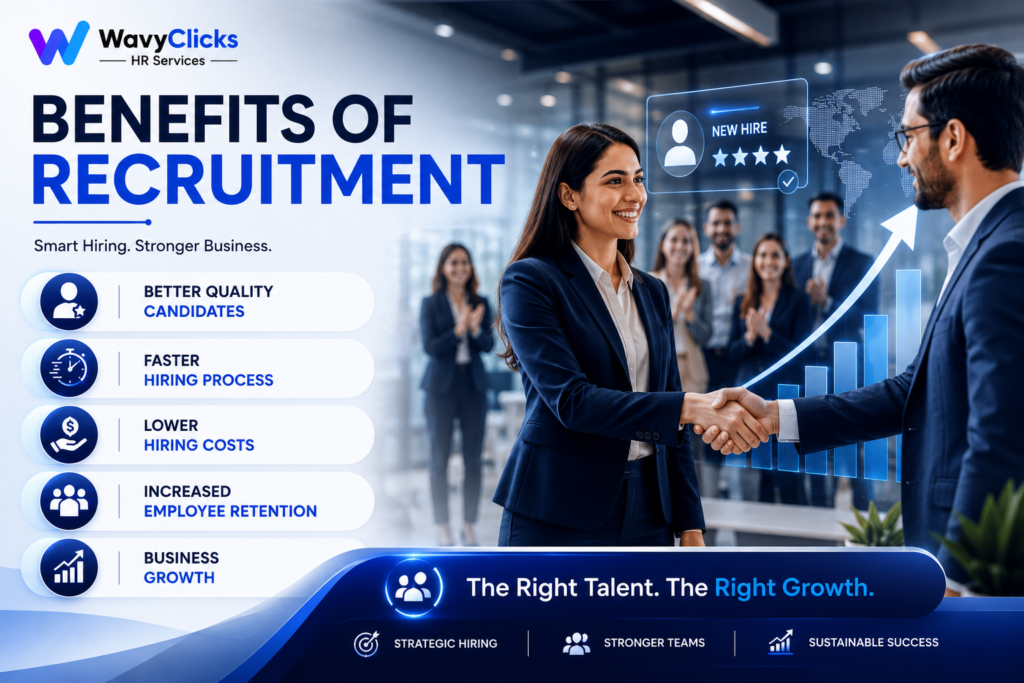
1. Better Quality Candidates
A structured recruitment process helps businesses identify candidates with the right qualifications, skills, and cultural fit, leading to better hiring decisions and stronger team performance.
2. Faster Hiring Process
Efficient recruitment methods reduce the time required to source, evaluate, and hire candidates, enabling businesses to fill critical vacancies without unnecessary delays.
3. Lower Hiring Costs
Hiring the right candidate the first time reduces expenses associated with repeated recruitment, training, and employee replacement, resulting in long-term cost savings.
4. Increased Employee Retention
Employees who are well-matched to their roles and company culture are more likely to remain with the organization, improving workforce stability and reducing turnover.
5. Business Growth
A talented workforce drives innovation, improves customer satisfaction, increases productivity, and supports sustainable business growth in a competitive market.
Common Recruitment Challenges
Even with a structured hiring process, businesses often encounter several recruitment challenges.
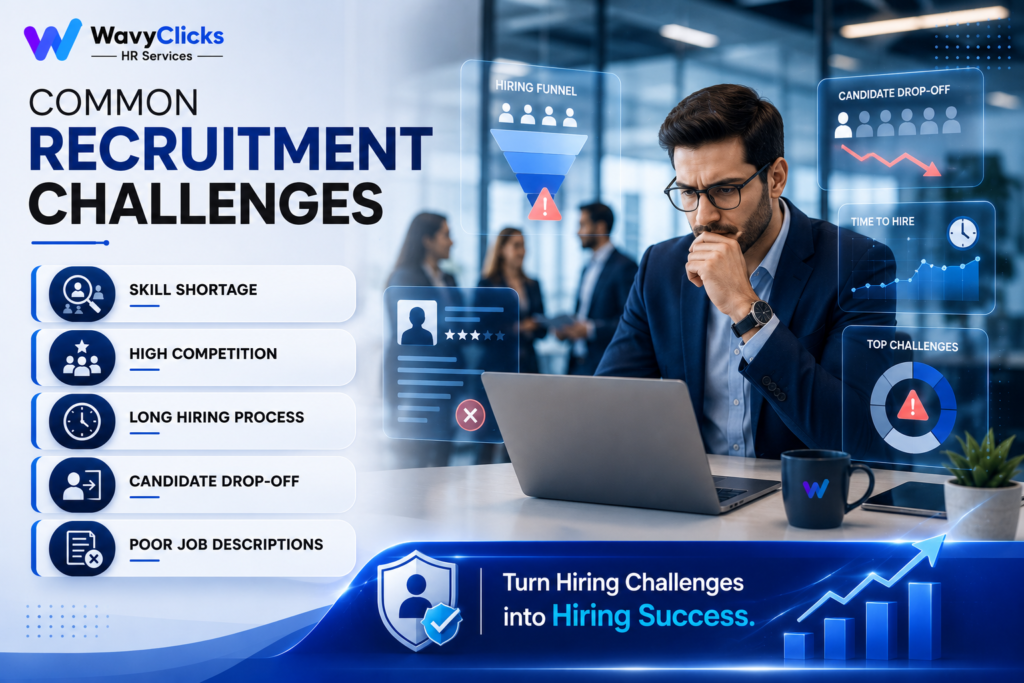
1. Skill Shortage
Finding candidates with specialized skills and relevant experience can be difficult, especially in highly competitive industries.
2. High Competition
Companies compete to attract and retain top talent, making it essential to offer competitive salaries, career growth opportunities, and a positive employer brand.
3. Long Hiring Process
Lengthy recruitment procedures can result in losing qualified candidates to competitors. Streamlining the hiring process helps improve the candidate experience.
4. Candidate Drop-Off
Some candidates withdraw during interviews or decline job offers due to delays, poor communication, or more attractive opportunities elsewhere.
5. Poor Job Descriptions
Unclear or incomplete job descriptions attract unsuitable applicants and increase the time needed to identify qualified candidates.
Best Recruitment Practices
To improve recruitment outcomes and hire the right talent, businesses should follow these proven best practices:
- Write clear, detailed, and engaging job descriptions.
- Use multiple recruitment channels to reach a wider talent pool.
- Maintain transparent and timely communication with candidates.
- Conduct structured interviews using standardized evaluation criteria.
- Build and nurture a talent pipeline for future hiring needs.
- Continuously review recruitment metrics and optimize hiring strategies.
Frequently Asked Questions (FAQs)
What is recruitment?
Recruitment is the process of identifying, attracting, screening, and hiring qualified candidates for job vacancies within an organization.
1. Why is recruitment important?
Recruitment helps businesses hire skilled employees, improve productivity, reduce hiring costs, and build a strong workforce for long-term success.
2. What are the stages of recruitment?
The recruitment process includes identifying hiring needs, creating job descriptions, sourcing candidates, screening applications, conducting interviews, selecting candidates, and onboarding new employees.
3.What is the difference between recruitment and hiring?
Recruitment focuses on attracting and evaluating candidates, while hiring refers to selecting the most suitable candidate and completing the employment process.
4. What are the different types of recruitment?
The main types include internal recruitment, external recruitment, campus recruitment, employee referrals, and recruitment through agencies.
Conclusion
Recruitment is much more than filling vacancies—it is a strategic business function that helps organizations build skilled, productive, and future-ready teams. By implementing a structured recruitment process and following best hiring practices, businesses can attract top talent, improve employee retention, reduce hiring costs, and achieve sustainable growth. Whether you’re hiring for a single position or expanding your workforce, investing in an effective recruitment strategy delivers long-term value and supports organizational success.
